
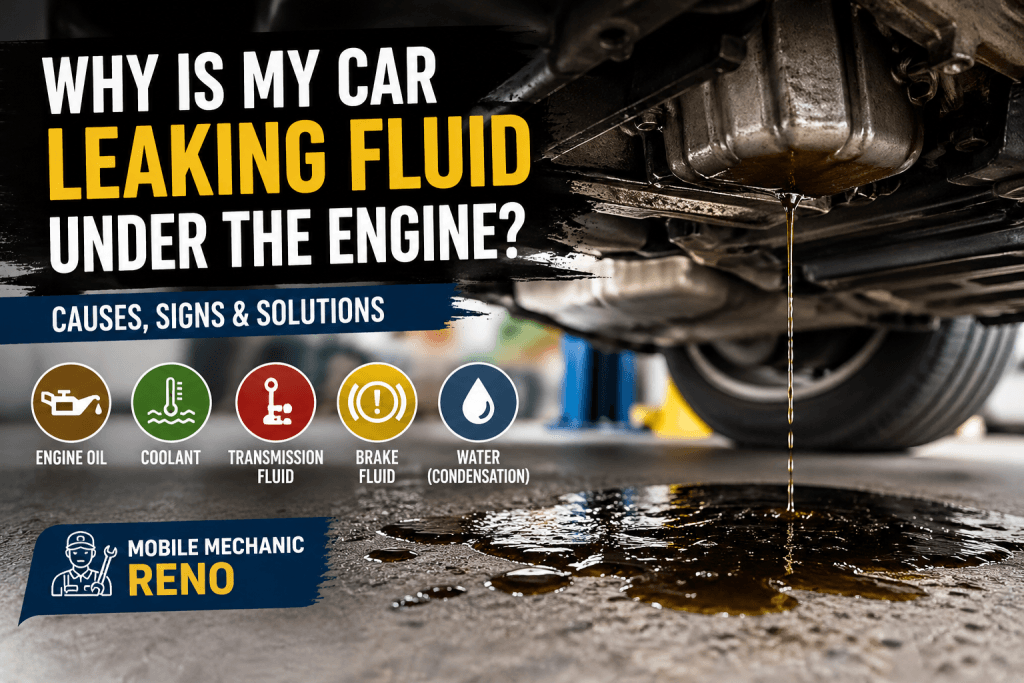
Seeing a puddle under your car can be worrying, especially when you’re not sure what it is or how serious the problem might be. Fluid leaks are one of the most common issues vehicle owners deal with, and while some are harmless, others can lead to expensive repairs if left unchecked.
If your car is leaking fluid under the engine in Reno, it’s important to identify the type of fluid and act quickly. With the changing weather conditions in Nevada, from hot summers to colder mornings, small leaks can quickly turn into bigger mechanical problems.
Common Types of Fluid Leaks and What They Mean
Not all leaks are the same. Each type of fluid has a different purpose, and knowing what you’re dealing with can help you understand the urgency.
Engine Oil Leak
Engine oil is usually dark brown or black and feels slick to the touch. If you notice stains under the engine area, it could be due to worn gaskets, a loose oil filter, or a damaged oil pan.
Oil leaks should be taken seriously. Driving with low oil can lead to overheating and long-term engine damage.
Coolant Leak
Coolant is typically green, orange, or pink and may have a slightly sweet smell. In Reno’s varying climate, coolant plays a crucial role in regulating engine temperature.
Leaks often come from cracked hoses, radiator issues, or a failing water pump. If left unresolved, your engine can overheat quickly.
Transmission Fluid Leak
Transmission fluid is usually red or pink and slightly thicker than engine oil. If you notice this type of leak, it could point to worn seals or a damaged transmission pan.
Transmission repairs can become expensive, so early detection is key.
Brake Fluid Leak
Brake fluid is clear to light yellow and very slippery. This is one of the most serious leaks because it directly affects your vehicle’s braking ability.
If you notice reduced braking performance or a soft pedal, stop driving and have the vehicle inspected immediately.
Water (Air Conditioning Condensation)
Sometimes the “leak” is just water from your air conditioning system. This is completely normal, especially during warmer days in Reno.
If the fluid is clear and has no smell, there’s usually nothing to worry about.
How to Tell Where the Leak Is Coming From
The position of the puddle can give you clues.
- Front center (under engine): Oil or coolant
- Near wheels: Brake fluid
- Middle of the car: Transmission fluid
- Passenger side: Often AC condensation
Still unsure? It’s always safer to have a professional check it.
Warning Signs You Shouldn’t Ignore
Fluid leaks often come with other symptoms. Pay attention if you notice:
- Burning smell while driving
- Engine overheating
- Dashboard warning lights
- Difficulty shifting gears
- Unusual noises
These signs usually mean the issue is getting worse.
What Causes Fluid Leaks in the First Place?
Leaks don’t just happen randomly. Most of the time, they’re caused by wear and tear over time.
Common causes include:
- Aging seals and gaskets
- Corrosion in metal components
- Loose or damaged hoses
- Poor maintenance habits
Regular servicing can help catch these issues early before they turn into bigger problems.
Can You Still Drive With a Fluid Leak?
It depends on the type of fluid, but in most cases, it’s not a good idea.
- Small water leaks: safe
- Minor oil leaks: short-term driving only
- Coolant, brake, or transmission leaks: avoid driving
Even a small leak can turn into a major repair if ignored.
How a Mobile Mechanic Can Help
Instead of risking further damage by driving to a shop, a mobile mechanic can come directly to you and diagnose the issue on-site.
They can:
- Identify the exact source of the leak
- Replace damaged hoses, seals, or components
- Perform fluid top-ups and system checks
This saves time and prevents additional wear on your vehicle.
Estimated Repair Costs (Guide Only)
Costs vary depending on the issue, but here’s a general idea:
- Oil leak repair: $100 – $500
- Coolant leak repair: $150 – $800
- Transmission leak: $200 – $1,000+
- Brake fluid leak: $150 – $600
These are just estimates. The actual cost depends on your vehicle and the severity of the leak.
How to Prevent Future Leaks
A little maintenance goes a long way.
- Check fluid levels regularly
- Inspect under your car for early signs
- Replace worn hoses and seals
- Stick to your service schedule
Preventing leaks is always cheaper than fixing major damage later.
A fluid leak under your engine is never something to ignore. While some leaks are harmless, others can quickly turn into serious mechanical issues. The sooner you identify the problem, the better your chances of avoiding costly repairs.
If you’re unsure what your car is leaking, it’s best to have it inspected right away. Catching the issue early can save you time, money, and stress.
FAQs
How do I know what fluid is leaking from my car?
Check the color, smell, and texture. Oil is dark, coolant is bright and sweet-smelling, and transmission fluid is usually red.
Is it expensive to fix a fluid leak?
It depends on the source. Minor leaks can be inexpensive, but major issues like transmission leaks can cost more.
Can I fix a fluid leak myself?
Some minor leaks can be fixed with basic tools, but most require professional inspection to ensure the problem is fully resolved.
How urgent is a fluid leak?
It varies. Brake and coolant leaks are urgent, while small oil leaks may allow short-term driving.
Will a leak go away on its own?
No. Leaks typically get worse over time and should be repaired as soon as possible.