
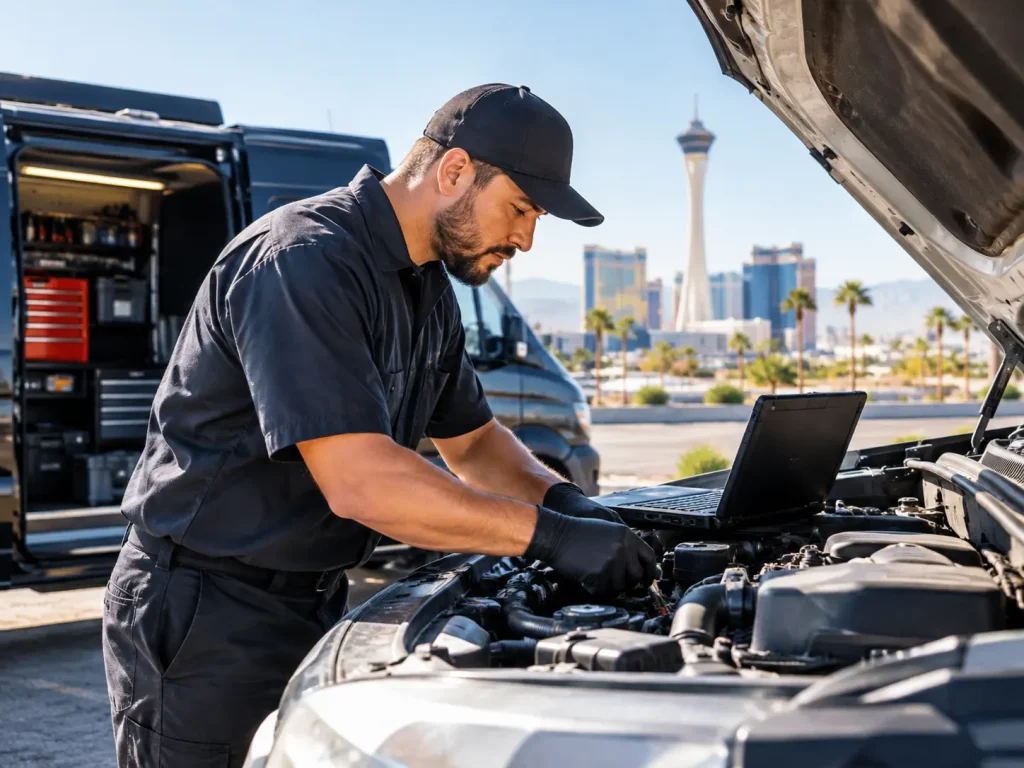
Your brakes are the most important safety system on your car. Every time you slow down for a light, avoid a stopped vehicle or roll down a steep hill, you are trusting them to work. The good news is that brakes usually give you plenty of warning before they fail. Squeals, grinding, vibration and changes in pedal feel are all clues that something needs attention. In Reno, where driving can include steep grades, winter storms, icy mornings and long descents toward the Sierra, brakes work hard and wear in ways you may not notice until a problem appears. This guide explains the most common warning signs that your brakes need service, what each one can mean, and what to do next. If you are searching for brake service in Reno, this is a good place to start.
How Your Brakes Work
Most modern cars use disc brakes, at least on the front wheels. When you press the pedal, hydraulic pressure pushes brake pads against a spinning disc called a rotor. The friction slows the wheel. Some vehicles use drum brakes on the rear wheels, where shoes press against the inside of a drum. Brake fluid carries the force from the pedal to the wheels, and lines, hoses, calipers and a power assist system complete the picture. Pads and shoes are designed to wear down over time, which is normal. Rotors and drums wear too, and brake fluid ages and absorbs moisture. That is why brakes need regular inspection and eventual service.
Warning Signs Your Brakes Need Attention
High pitched squealing or squeaking
Many brake pads include a small metal wear indicator designed to make a squealing sound when the pads are getting thin. That sound is an early warning that service is due. Squeaking can also come from dust, moisture or glazed pads, especially on cold or damp mornings, so a brief squeak that goes away is not always a problem. A squeal that is constant or returns often is worth having checked.
Grinding or growling
A harsh grinding noise is a more serious warning. It can mean the pads have worn down to the metal backing, so metal is now rubbing on the rotor. Driving in this condition can damage the rotors and make the repair larger. If you hear grinding when you brake, have the system inspected as soon as you can.
A soft, spongy or sinking pedal
If the brake pedal feels soft, goes lower than usual or slowly sinks toward the floor, there may be air in the lines, a fluid leak, a failing master cylinder or another hydraulic problem. This is a safety concern. Do not wait on it. Have the car checked right away and avoid driving it if the pedal feels unreliable.
A hard pedal or increased effort
If you need to push much harder than usual to slow the car, the power assist system may not be working properly. This can make stopping take longer. Have it inspected promptly.
Vibration or pulsing when braking
If the steering wheel shakes or the pedal pulses when you brake, the rotors may be warped or unevenly worn, or something else in the brake or suspension system may need attention. Vibration that happens only when braking is a strong clue the brakes are involved. If the shaking also happens when you are not braking, the cause may lie elsewhere, such as tires, alignment or suspension.
The car pulls to one side
If your car drifts left or right when you brake, a caliper may be sticking, a hose may be failing or the pads may be wearing unevenly. Pulling can also come from tire or alignment issues, so a technician can sort out the cause.
A brake warning light
A brake warning light on the dashboard can mean low brake fluid, a problem with the system or that the parking brake is engaged. Some cars also have an ABS light for the anti lock system. Check your owner’s manual to learn what the lights on your car mean, and do not ignore a light that stays on.
Burning smells or smoke
A sharp, burning smell after hard braking, especially on a long downhill, can mean the brakes are overheating. If you notice smoke or a persistent smell, pull over safely and let the brakes cool. Have them inspected before relying on them again.
Leaking fluid
Brake fluid is usually clear to light brown and slippery. If you see fluid near the wheels or under the car, or if the fluid level in the reservoir keeps dropping, there is a leak. This is a serious problem that can lead to brake failure.
Longer stopping distances
Sometimes the sign is simply that the car takes longer to stop than it used to. If you find yourself braking earlier or pressing harder, trust your instinct and get the system checked.
Why Reno Driving Is Hard on Brakes
Reno sits at a high elevation, with mountain roads on the edge of town. Drivers who head toward Lake Tahoe, Mount Rose or the Sierra face long, steep descents that can heat up brakes quickly. In winter, snow, ice, road salt and gravel can add wear and corrosion to brake parts, and cold, damp mornings can make squeals more common. Summer heat and stop and go traffic add their own stress. It is a good idea to have your brakes inspected before the winter season and before any mountain trip, and to follow your owner’s manual for how to drive down long grades, such as using a lower gear to help control speed.
What a Brake Inspection Includes
A thorough inspection looks at much more than the pads. A technician will usually check:
- Brake pad or shoe thickness and condition.
- Rotors and drums for wear, scoring, warping or rust.
- Calipers and wheel cylinders for sticking or leaks.
- Brake lines and hoses for cracks, leaks or damage.
- Brake fluid level and condition.
- The parking brake.
- The warning lights and, if equipped, the ABS system.
Based on what is found, the recommended service may range from replacing pads to resurfacing or replacing rotors, replacing a caliper or hose, or flushing the fluid. A good technician will explain what is worn, what can wait and what needs attention now.
Can You Keep Driving?
This depends on the symptom, but a good rule is not to take chances with brakes. A faint squeal that shows up now and then may leave you time to schedule service soon. But grinding, a soft or sinking pedal, pulling, leaking fluid, smoke or a warning light are reasons to have the car inspected right away, and in some cases to stop driving it. If you are unsure whether it is safe, play it safe and call a professional.
Simple Habits That Help Brakes Last
- Leave more space. Looking ahead and slowing gradually is easier on the brakes than sudden stops.
- Do not ride the brake pedal. Constant light pressure creates heat and wear.
- Lighten the load. Extra weight means more work for the brakes.
- Use a lower gear on long downhill grades, if your owner’s manual recommends it for your vehicle.
- Keep up with fluid service according to your owner’s manual.
- Get regular inspections, especially before winter and before mountain trips.
- Listen and feel. Pay attention to new sounds and changes in pedal feel.
How a Mobile Mechanic Can Help
Brake trouble is not something you want to keep driving on, and a trip to a shop is not always easy. A mobile mechanic can come to your home or workplace to inspect the brakes, explain what is needed and handle many common brake repairs on site. That convenience can make it easier to deal with a problem early. Some brake work needs specialized equipment and may need a shop, and a good technician will be honest about what can be done where you are.
Brakes are just one part of a reliable car. If you also have trouble with starting, our guide on the top 10 reasons your car won’t start is worth a read. And if you notice shifting problems along with brake concerns, our post on common transmission problems and what they mean can help you understand what to watch for.
Your Brake Warning Checklist
- Squealing or squeaking that keeps coming back.
- Grinding or growling when you brake.
- A soft, spongy or sinking pedal.
- A hard pedal or much more effort needed.
- Vibration or pulsing when stopping.
- The car pulling to one side.
- A brake or ABS warning light.
- Burning smells, smoke or fluid leaks.
- Longer stopping distances.
If you notice any of these, do not wait for it to get worse. Brake service is one of the most important things you can do for your safety and for the people sharing the road with you. To get your brakes looked at, visit our homepage to learn more, or contact us to schedule a visit.